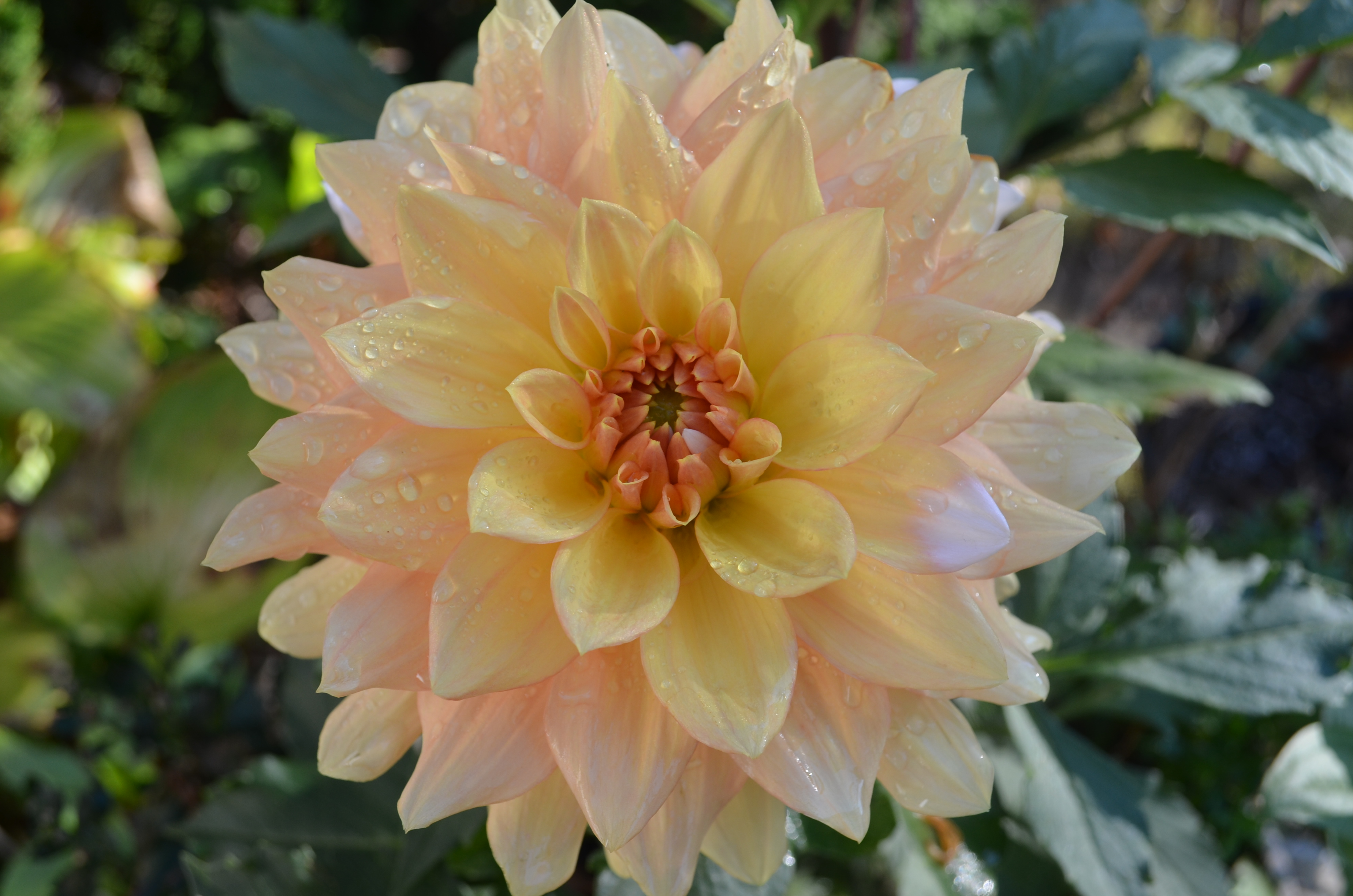
It’s midnight and I just got an email from Firefox with the subject “Keep that Weird Thing You Searched for Private.” Their bots must have detected my “weird” searches for “Did I lift my dahlia tubers too early,” “How do I find the eyes on my dahlia tubers,” “I think I dug up my dahlia tubers too early,” and “how to avoid stress eating at midnight because i dug up my dahlia tubers before they developed eyes.”
It is early November and still no killing frost. It was a balmy October and the nights haven’t been cold enough to cast that withering pall over the garden. I had a window of opportunity to dig up the dahlia tubers yesterday and I went around yanking them all up by their necks.
As usual, I read the directions AFTER slap dashing my process in a speed gardening frenzy. And I realize I did everything wrong, dahlia-wise. Totally. Wrong. Let’s start with all the wrong things I did in the Spring:
I bought a bunch of dahlia tubers on sale last Spring. I just tucked them into the garden willy nilly and left them to fend for themselves. Some were lucky, but that was generally not what you’re supposed to do. They like to dry out between deep waterings. They don’t like wet feet because (as I found out when I stuck my hand in a poorly drained pot to find tuber mush) the tubers will rot. Also, you have to selectively pinch out competitive growth. So, here we go, starting with Spring…
Late March – Potting the Tubers Eyes Up!
Don’t wait for Mother’s Day to get your dahlia fix. Tubers can be started indoors around late March–about a month before planting out in the garden. Plant the tubers, eyes up, in a soilless mix. The eyes are tiny nodes on or near the neck of the tuber, where the little potatoes attach to the old stem. Water sparingly and do not fertilize. The roots provide enough nutrients to start the plant. Place the potted dahli-baby under a fluorescent lamp next to your seedlings, or in a very sunny window.
Early May – Planting Dahlias in the Garden
Right plant, right place
They prefer full sun, but not burning, afternoon sun. They prefer less humid conditions and cooler nights. Initially, dahlias do not need a lot of water to get started. Moist, warm soil will get dahlias growing. Soil with a neutral pH (not acidic or alkaline) will create the correct conditions for the tubers to absorb the nitrogen, phosphorus, and potassium (NPK) and micronutrients they need to thrive.
Staking
If you planted a tall variety, above 3′ tall, they will need to be staked if you don’t want them trailing on the ground like mine were. (Tragedy! Some of the blooms spent the whole late Summer and Fall face down in the dirt.) Dahlias have hollow stems that make them floppy and somewhat susceptible to pests. Stake them at the time of planting so you don’t stab your tubers.
The American Dahlia Society recommends treating your dahlias like tomatoes. If you started your tubers indoors a month before planting out, you can remove the bottom one or two sets of leaves, and plant the tuber with those leaf nodes that you just trimmed under the soil line. They will then sprout roots and possibly eyes for next year’s harvest from those nodes. You can do a similar thing for tomatoes to establish a stronger root system.
Topping
Their first pair of leaves are the cotelydons or seed leaves that were used for food storage inside the seed. The next set of leaves are the first “true leaves.” Once the dahlia has reached about 10″ tall and has sprouted at least three sets of true leaves, you can “top” the dahlia stem and pinch out the terminal bud. This will be painful for you, but it will trick the growth hormone (auxin) into creating stronger lateral growth and encourage more flowering.
Late July/Early August – Blooming Dahlias
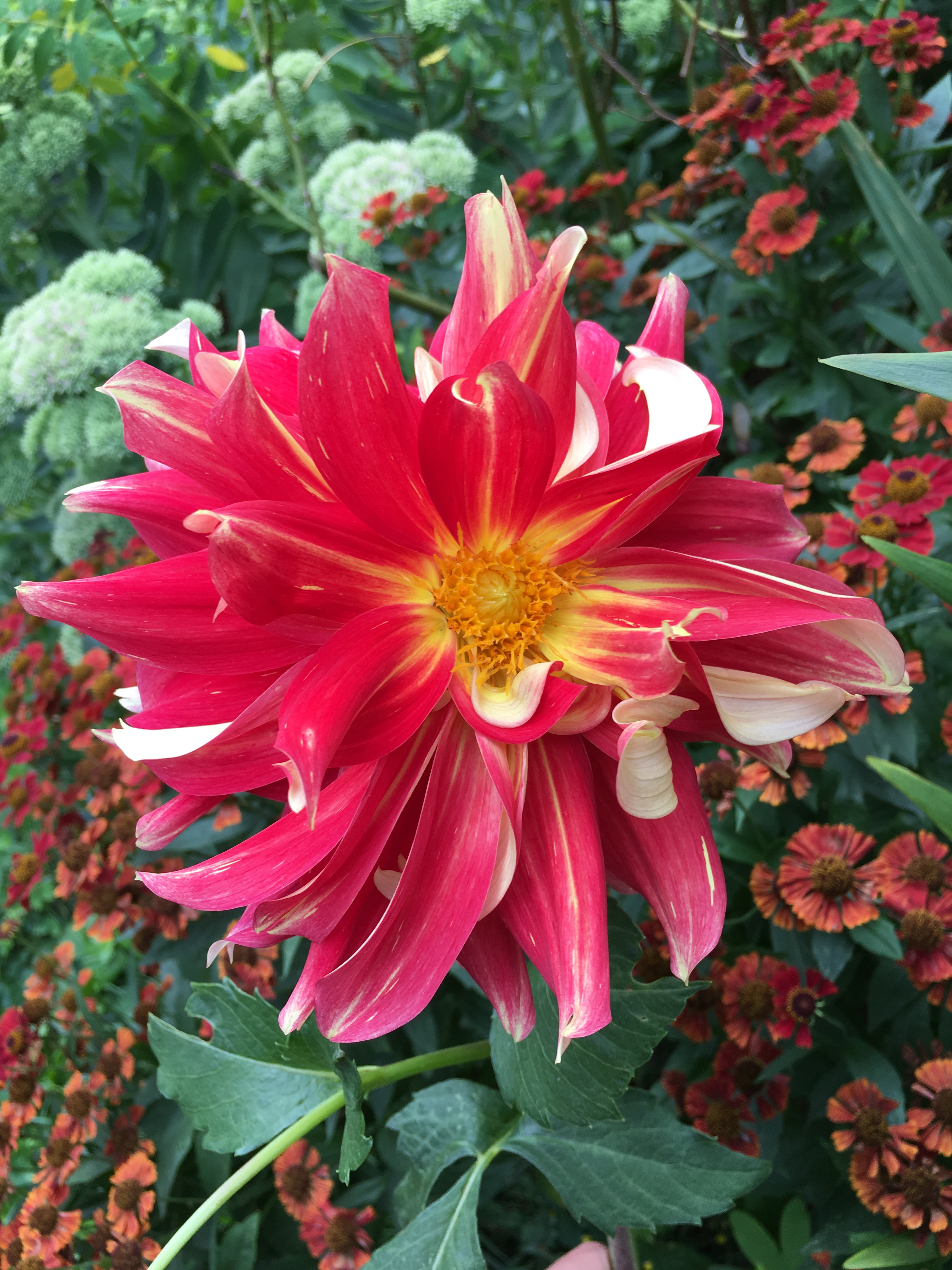
Dahlias start blooming in late July/early August when the days get shorter, roughly two months after planting. Many sources say to avoid high nitrogen fertilizer and to apply phosphorus which promotes flowering, but the American Dahlia Society (ADS) is testing these hypotheses. According to everything I’ve read, I will probably not go overboard with fertilizer. It is recommended to deadhead often to prevent seeds from redirecting the energy of the plant away from producing your blooms.
When you cut stems for display in a gorgeous vase, one source said to put the stems in very hot water for an hour to force them to last for 4-5 days.
Longwood Gardens dahlia growers recommend misting the dahlias in very hot weather, but avoid heavy watering so the tubers do not rot.
Disbudding
Depending on the stem strength of the variety you planted, you should pinch off the two buds flanking the center leader bud. This will ensure that your bloom has less competition for food and sunlight.
Dahlias produce three buds at the end of each branch along with two more buds at the next lower leaf pair. Remove the outer two buds of the set of three and also the two below; thus, saving only one flower of the group of five.
I never did any of this. No wonder I had so few blooms! I had no idea they were begging for attention all summer.
Mid-November – Digging up Your Tubers
Usually the cold night time temperatures force plants to store more food in the form of starch, so they start to look really good right before the killing frost freezes everything into oblivion. But the more succulent plants like coleus and dahlia are more visibly affected by light frost and tend to lose their color and droop. This is time to cut the bedraggled stems off your dahlias, leaving a 4″ stub. Make sure you cut down to the solid stem. If you leave a hollow stem, it could will fill up with water and rot the tubers. Notice a theme here?
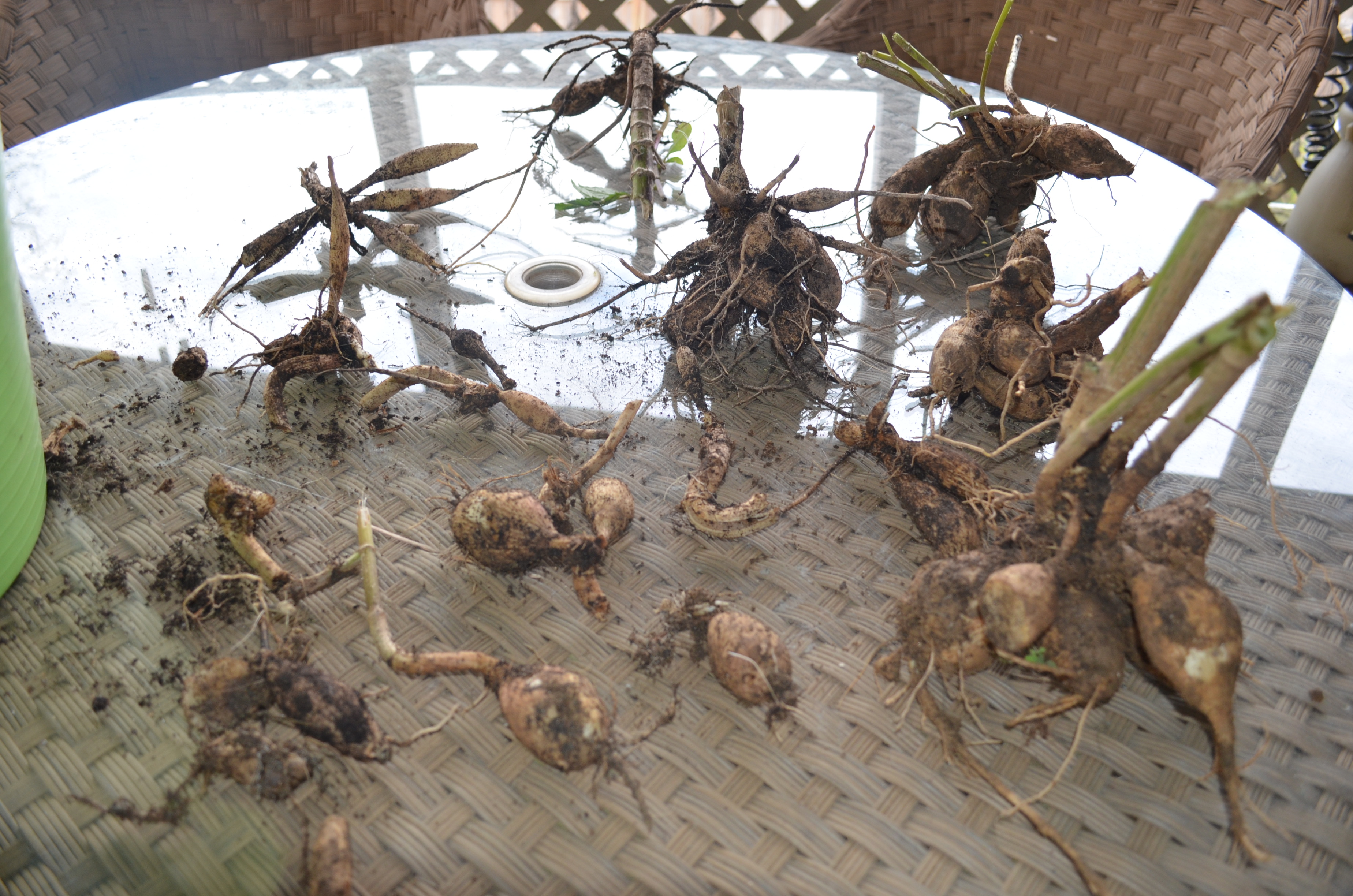
After a week of chilly night time temperatures, the tubers have developed their eyes for next year’s sprouts. It is finally time to lift the tubers! Remember: dahlia tuber necks are very fragile, especially right after digging them up. Most people rinse them with the hose to remove the majority of dirt. Let them cure in a shaded, dry spot for a few hours or over night, and their skin will toughen up a bit allowing them to tolerate a more aggressive dirt removal. If the tuber breaks off the neck without eyes attached, they will not sprout in the Spring.
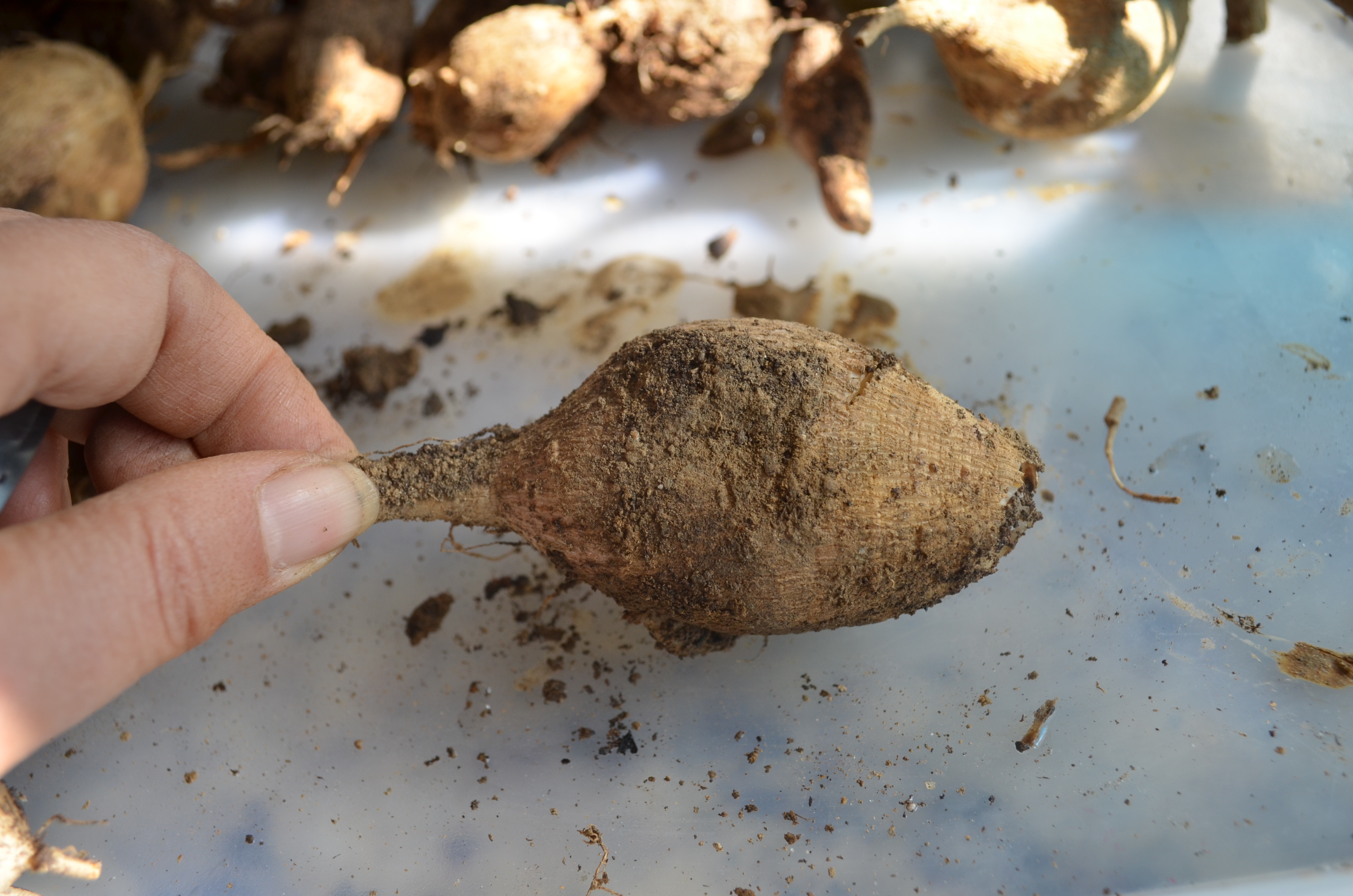
After allowing the tubers to dry, you can divide them in the fall or wait until spring. Be sure each divided tuber has a piece of the crown with an eye. Found on the dahlia crown, eyes are raised circular areas where the tuber connects to the stem. Some dahlia varieties have eyes that are easier to see than others. As long as you have a piece of the stem, you will most likely have an eye that develops.
Growing Dahlias at Home
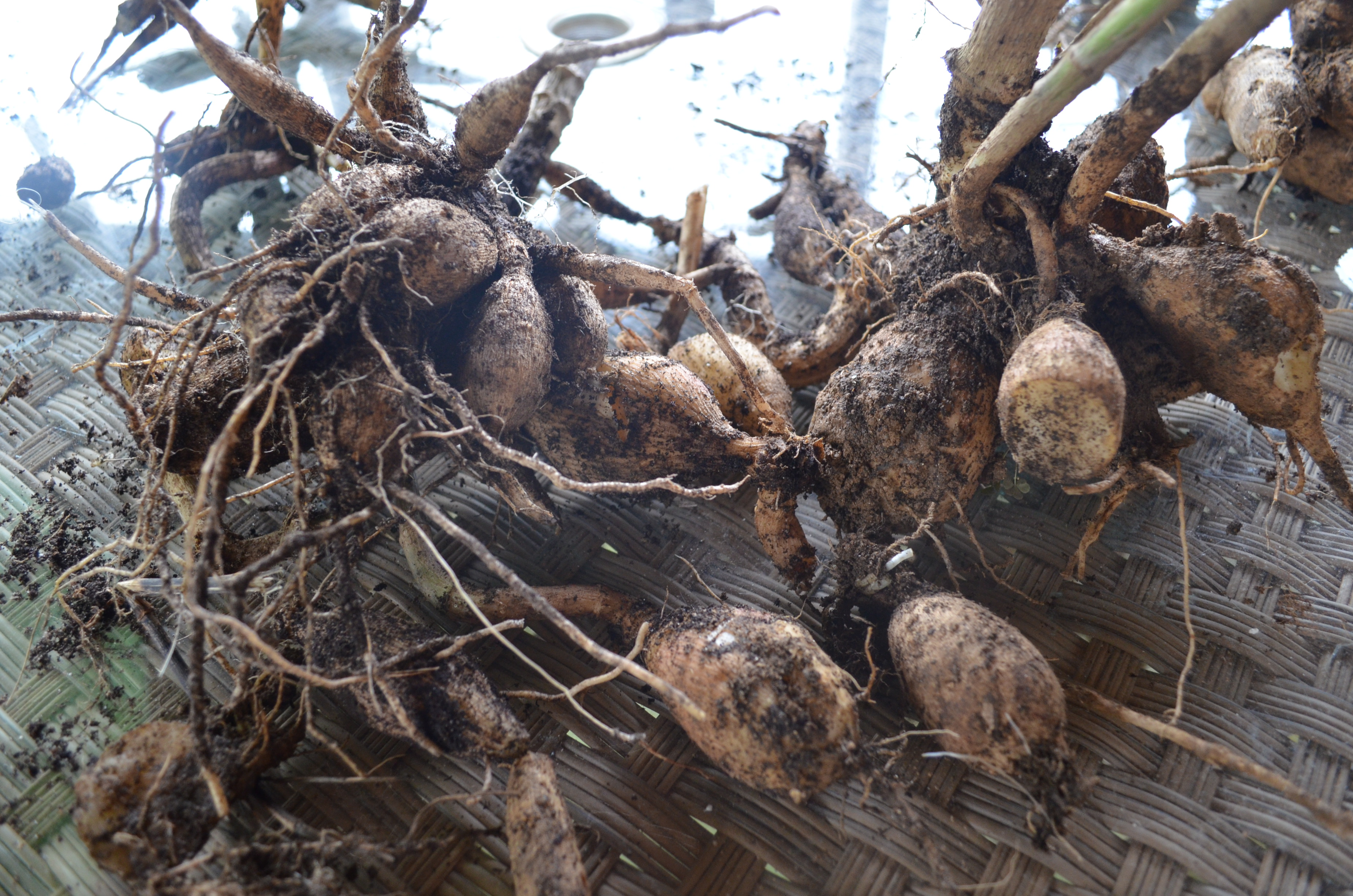
You can clip away any hairy or leggy bits of the tubers and any part of the stem that looks like it might promote rot while in storage. It doesn’t seem to be an exact science to determine how to divide the tuber clumps; although, EVERYTHING in gardening is an exact science. Once you internalize the science behind one thing, you uncover a web of knowledge that connects you to many other gardening processes. Then you have unlocked the tools to make art out of the science. But back to tubers. I divided my larger tuber clumps into fours, making sure each division retained a piece of the crown that looked like it had eyes. The eyes were very hard to see if they were there at all.
Storing the Tubers
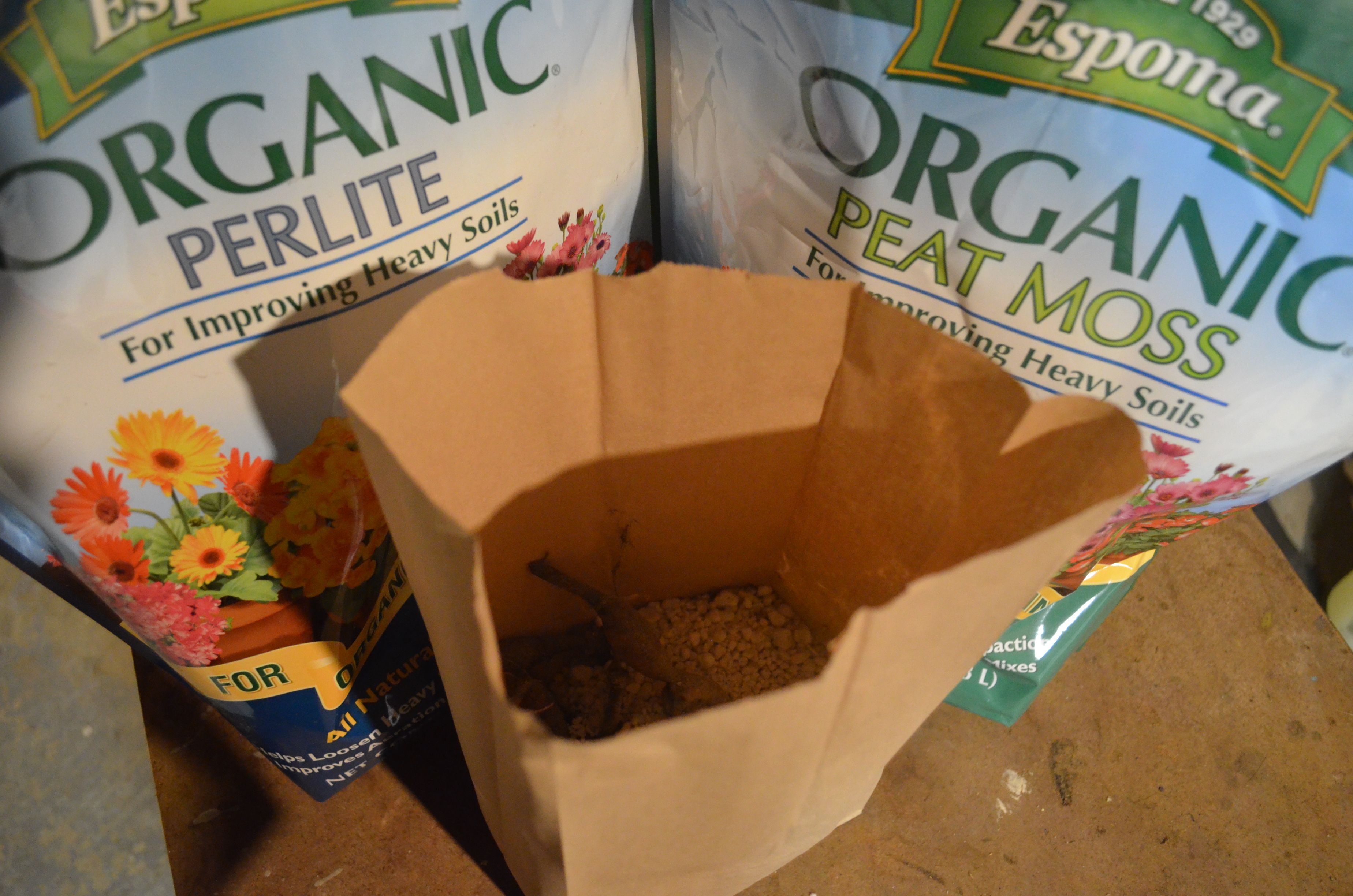
I am thoroughly confused about which medium to use to store the tubers. Some growers use coarse vermiculite and/or sawdust. (There are concerns about vermiculite containing asbestos because they are both products of ore and their mineral deposits are often in proximity to each other. After reading about it, I’m going to make sure to buy vermiculite that says “non dusty” on the label.) I’ve read that perlite does not absorb excess moisture well enough. And peat moss tends to dry tubers out while moist peat moss tends to make them rot.
The ADS recommends wrapping individual tubers in plastic wrap after using some application of fungicide (like sulfur dusting or diluted bleach). Plastic wrap and fungicide are two things that do not exist in my mental toolbox.
I am going to try two methods: the nothing method and the play sand method. I’ll put some in a cardboard box under brown paper bags to keep out light, and I will store the other half in play sand.
The tubers should be stored at a constant, cool temperature of 40 to 45 degrees. Mine will be taking up valuable realestate in the beer fridge!
Spring Comes Around Again
If you are going to plant them directly into the garden in early May, move the tubers to a dark, warm location to encourage eyes to develop. Once the eyes have sprouted, it’s time to plant them out in the garden! The eyes should be planted about 6″ deep. The tubers can be laid horizontally in the hole if that makes it easier if you have to engage in speed gardening like I do.
If you potted up your dahlias a month prior to planting, you get more instant gratification putting your little green sprouts in the ground.
Dahlia History and Culture
The national flower of Mexico, the dahlia originated along its sandy hills in the 16th century. The Aztec people grew the tubers as a food crop, but the Spanish Conquistadors soon dispatched that culinary tradition. The Spanish colonists sent the first dahlia tubers back to Madrid in the late 1700s, and they were eventually named after a Swedish botanist, Anders Dahl.
Dahlias are octoploids. While most plants only have two sets of chromosomes, dahlias have 8! This allows for much more variety in expression of shape, size, and color. And like most flowers that do not attract pollinators with scent, they have evolved to display a wide range of bright colors.
Here is a handy list from ADS that illustrates the different forms of dahlia. There are pompons, dinner plates, cactus, orchid, water lily blooms, all of which will add little bursts of happiness in your garden. Enjoy!
 Heart of the Garden
Leave a comment