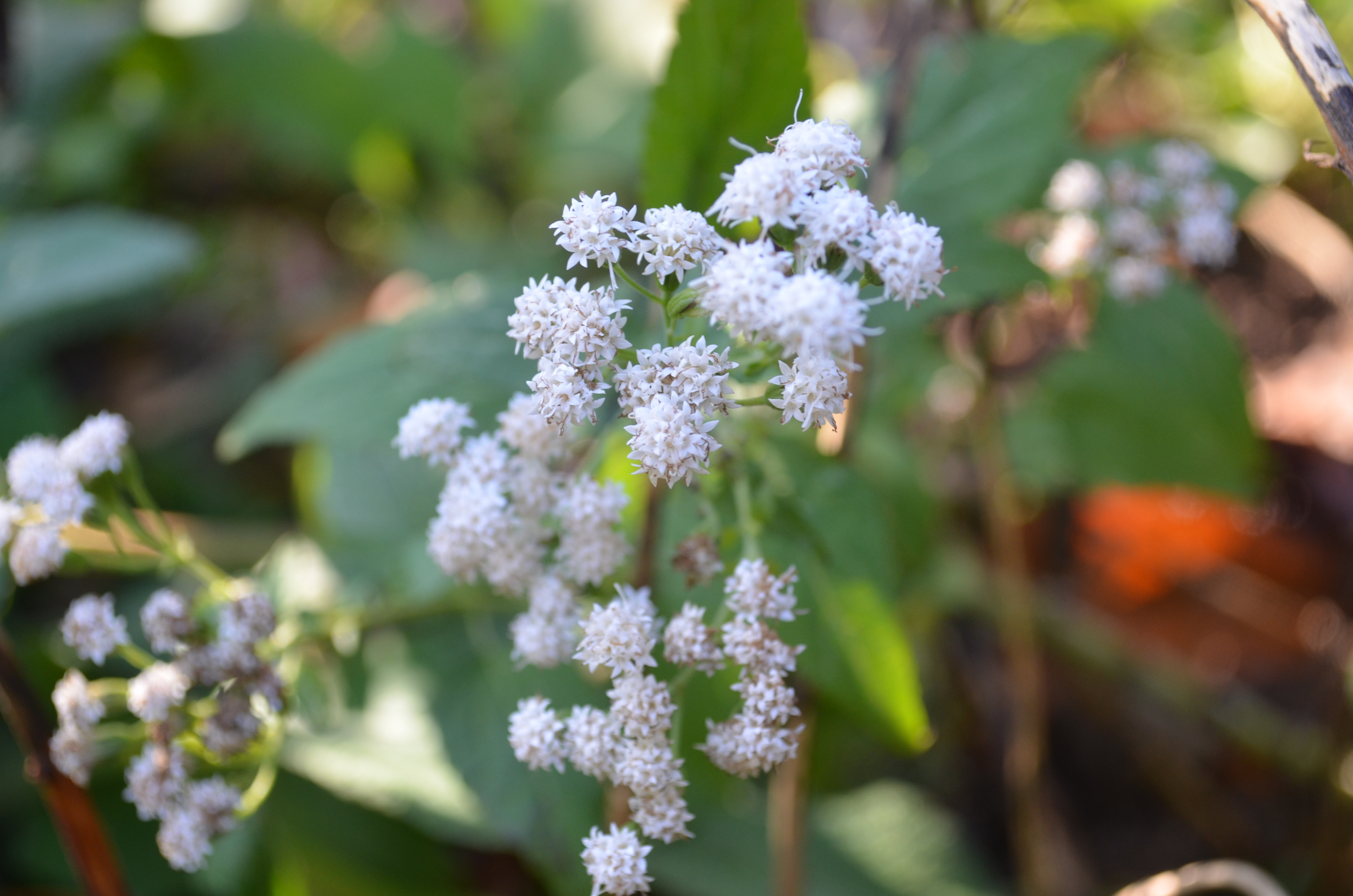
In mid-to-late October, you might see some ubiquitous tiny, white pompom flowers in a lot of part-shade woodland spots. It has probably popped up in your own garden. This is white snakeroot (Ageratina altissima) in the aster family. It was previously classified in the genus Eupatorium rugosum because of its resemblance to other Eupatoria like Bonesets and Joe Pye Weed.
It is a native perennial that serves as the last remaining food source for lepidoptera and hymenoptera (butterflies and bees) in late Fall before winter hits. There is a variety called “Chocolate” Snakeroot recommended by our very own Mount Cuba Center for its beautiful dark purple foliage. It provides a dramatic contrast to other colorful low-rise perennials. It spreads by rhizomes as well as seeds, but it is relatively easy to control.
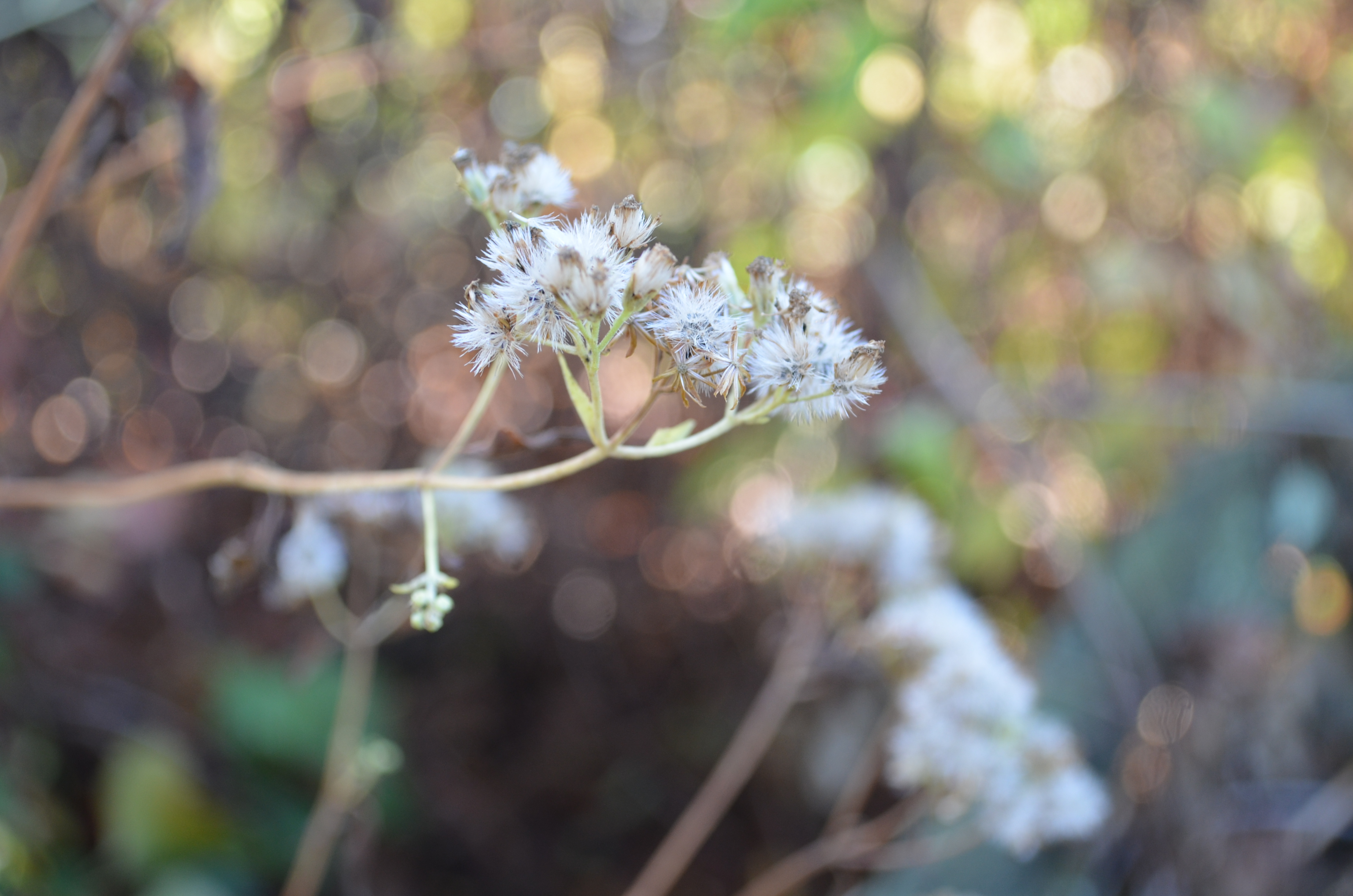
You might have wondered if this was a weed worth pulling. You may have pulled it before it got to this late in it’s seed-dispersing state. But here is a story you can tell while strolling through your garden with curious friends that might change your mind about the value of this native plant.
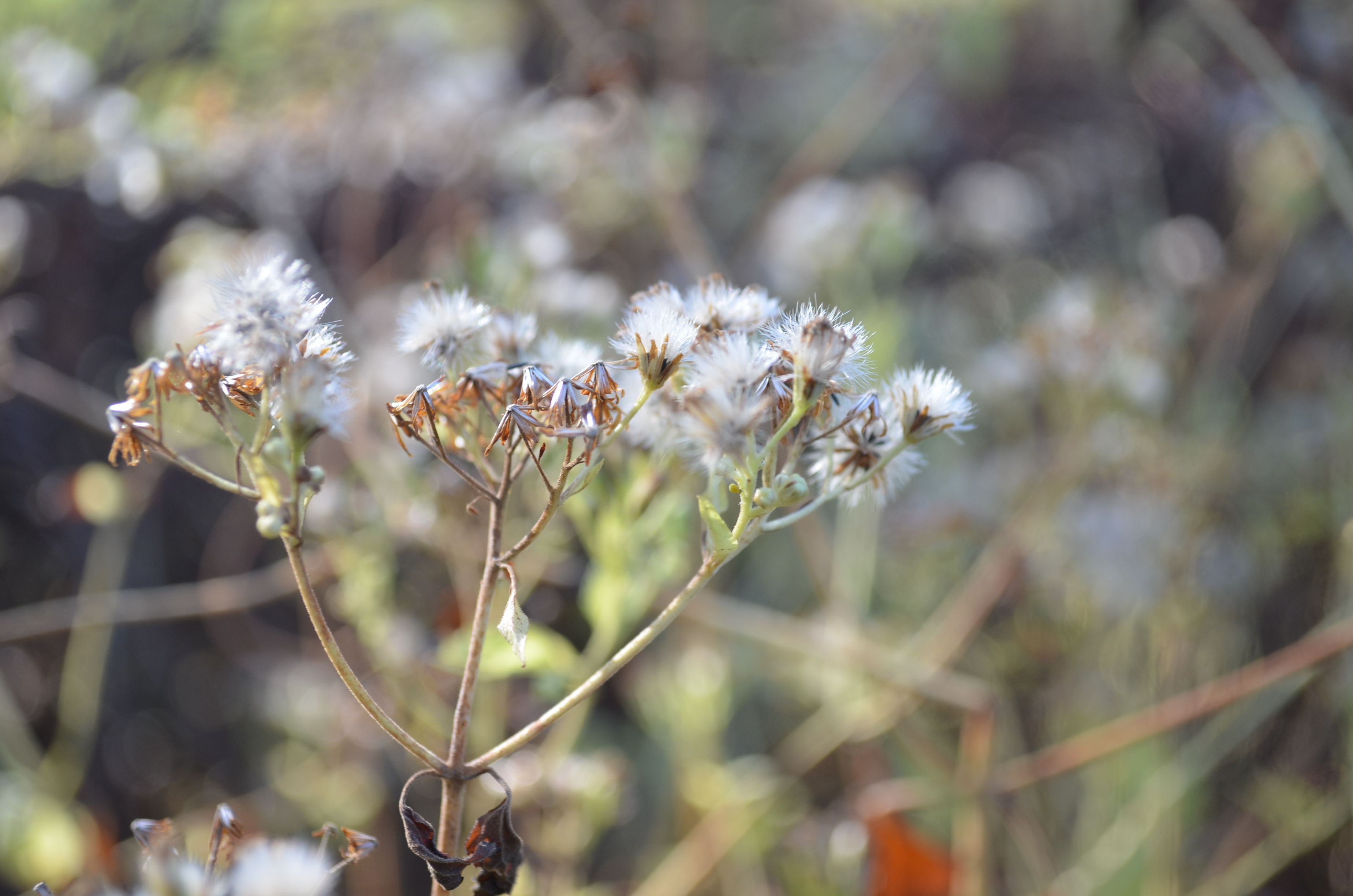
White snakeroot got its common name from European settlers who mistakenly thought it had medicinal properties that could cure snakebites. Quite the contrary, it contains a chemical called tremetol in the stems and leaves that was the cause of thousands of deaths due to “milk sickness” in the midwest in the early 1800s. It is said that Abraham Lincoln’s mother, Nancy Hanks Lincoln, died of milk sickness at the age of 34 when Abe was only 9 years old in 1818. Cows and sheep eat snakeroot in dry seasons when other, more preferable food is scarce, despite its bitter taste. Tremetol is then expressed in their milk. It causes many terrible symptoms or even death in the calves or people who drink it. It can also kill the animal as well or simply give the what was referred to as the “trembles” or “the slows.” That sounds just so frightfully Georgian.
Enter frontier doctor Anna Bixby, who studied midwiffery and dentistry in Philadelphia– two of the few areas of medicine allowed of women at the time. A lot of folklore surrounds her life, but the most consistently told story has her moving from Philadelphia to rural Illinois to become a local physician in the early 1800s. She learned from a Shawnee woman about the effects of snakeroot on cow’s milk. The Shawnee woman’s identity was tossed on the ash heap of history. And although, she was responsible for preventing hundreds of people from contracting milk sickness in Illinois, Dr. Anna’s research was not taken seriously until 55 years after her death. Today the advances of industrial dairy farming have exchanged the risk of milk sickness with other undesirable effects, but at least we have that information available to us. Knowledge is power. And milk is not really that good for you with or without snakeroot!
 Heart of the Garden
Leave a comment