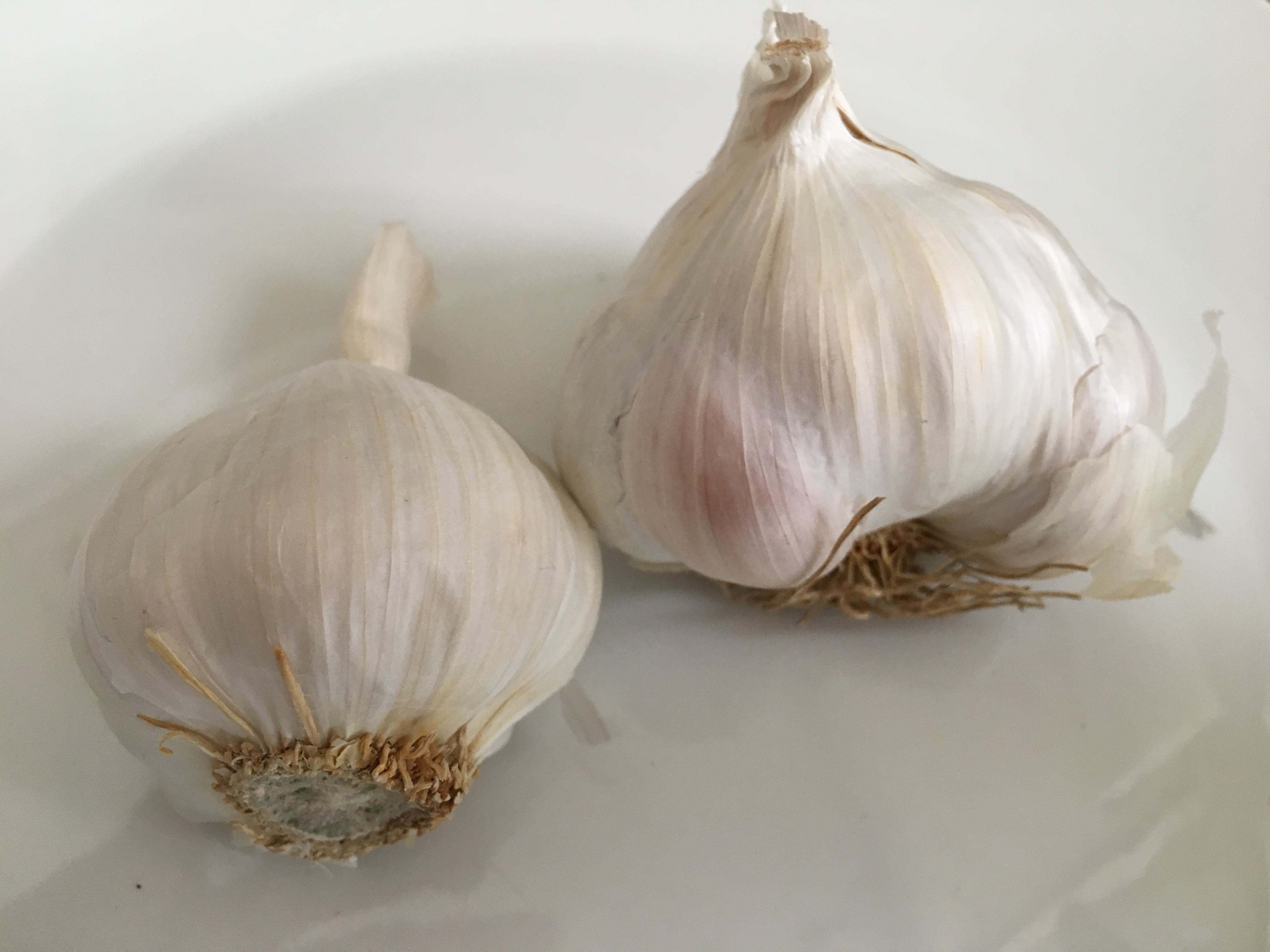
Halloween always seems to come too early. I’m never ready for the orange and black dollar store trinkets when they start snarling up the landscape. But it is a harbinger of the all hallowed garlic planting season!
Garlic is a pretty reliable and fun thing to plant. Someone I spoke to recently asked why you’d plant garlic when it’s so cheap to buy in the grocery store. It’s cheap because it has less flavor than the stuff you grow yourself, and it may be sprayed with a sprouting inhibitor for extended shelf life. Plus, if you grow hardneck garlic, you can harvest the scapes and stirfry, soup, dip, or pickle them.
So, when you begin your garlic odyssey, you have to decide if you want hardneck or softneck. The difference is belied by the name. Softneck are easier to braid because the central stem is soft. They have a higher yield, but smaller cloves. Hardnecks are said to have stronger flavor, and they grow scapes or false seed heads that are harvested in late June-ish before they open into flowers.
I usually get garlic from a local farmer’s market because you know they are suited to your area’s growing conditions and they aren’t treated with sprouting inhibitors.
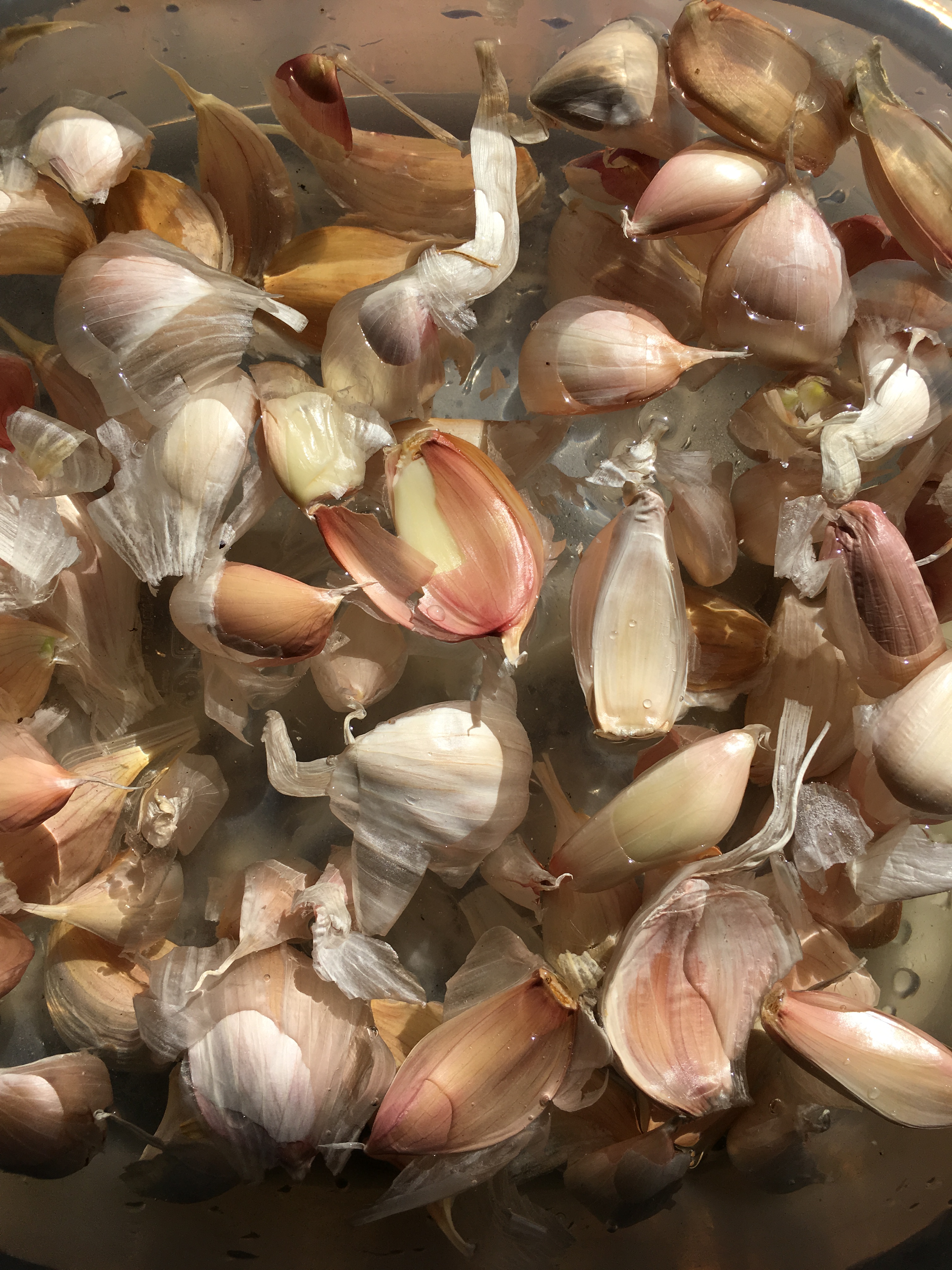
Separate the cloves, but do not peel the skin. The skin protects the clove from pathogens. I like to soak my cloves in water and a little baking soda and maybe some kelp fertilizer for 30 minutes before planting. I like to plant only the big cloves because they will get larger faster.
Choose a sunny, low rent spot to plant them because they will take up valuable realestate until late July. They like somewhat alkaline soil, so if your soil has a Ph below 6.5, you may want to add some lime. They don’t like competition, but they can be somewhat unobtrusive. Planting in raised beds is best because the uncompacted soil will give the bulbs space to grow.

Plant each clove pointy side up, at a depth of 2″ and at least 6″ apart. Then mulch, if you have it available, with shredded dried leaves or straw. They should send up some shoots before frost. It’s reassuring to see those green shoots peeking out of the snow during the winter months. Then they start to perk up in the Spring when you can help them along with a bit of organic, nitrogen-rich fertilizer. I have never added anything but compost to my garlic, so it would be just fine to skip that step. Compost tends to reduce acidity. so they might actually appreciate that.
Yellow leaves could mean many things, but at this point it might mean that they need more nitrogen if they are not simply just too dry.
Hardnecks will put up their scapes in June. Then you can harvest the bulbs once the leaves start to look raggedy and yellow, but not totally brown. You can dig one up as a test. Do not yank it out by the leaves. Even if it’s too immature, you can still cook with it. Green garlic is a thing.
Shake off the dirt. Dry the garlic on a porch or somewhere out of the beating sun. I let mine dry until I have a minute to deal with it. Usually a week or two. The garlic can then be stored all year in a cool, dry place. Mine usually does not make it until the end of summer because I usually triple the amount of garlic in a recipe and add four.
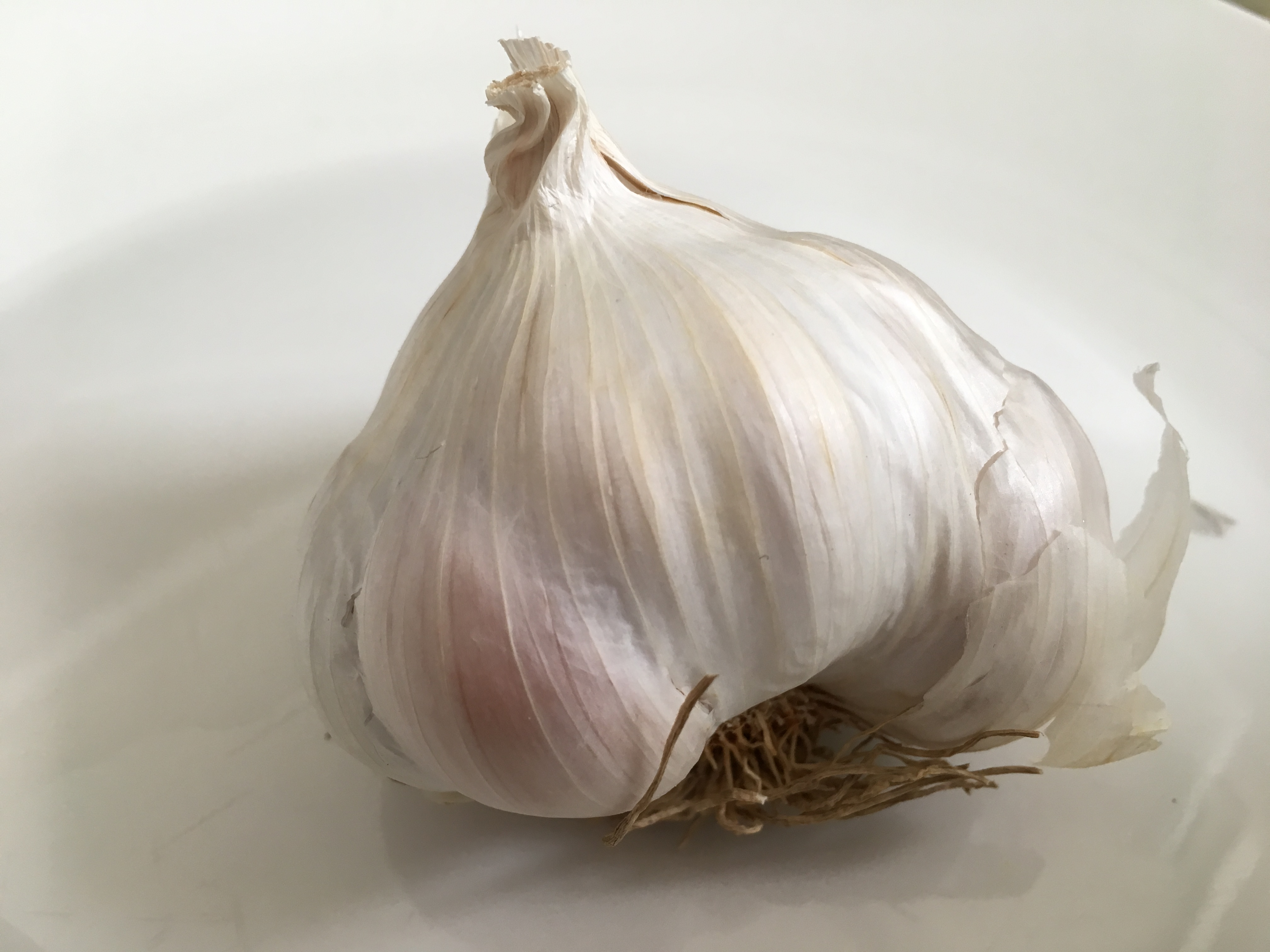
If you want to braid hardneck garlic, you can always invest in some raffia from the craft store and give it some hair extensions!
I like to put some dried gomphrena and straw flowers in with the braids reinforcing its monicker as the stinking rose.
Garlic is a fun thing for kids to plant. And if they plant it, they might just be more willing to actually eat it!
 Heart of the Garden
Leave a comment