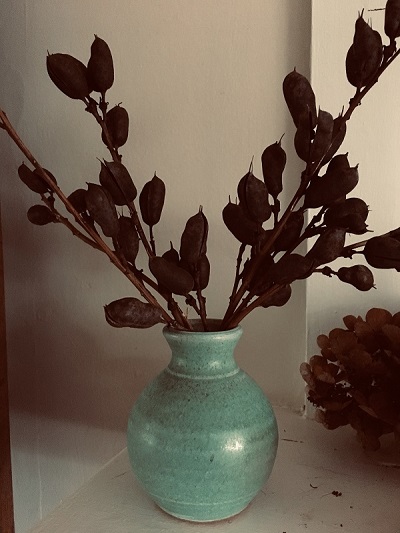
 My garden is a leggy mess. The bee balm has powdery mildew. The irises, long spent, are prostrate on the ground like a haircut gone wrong. The hostas have died back to reveal every terrible thing I threw in that patch thinking they would dissolve or decay unnoticed (like that dried out cyclamen I couldn’t revive, about twenty plant labels, and a pineapple top that just refuses to compost.)
I’ve been seed collecting for years, but it only recently really hit me that there is an ideal time to collect seeds from certain plants for them to be viable. This is science after all. You can’t just go around willy nilly having fun all the time! Usually, you have to wait until the seed pod or seed-holding structure, if I may yes you may, is completely dried up and brown, but hasn’t tossed its seeds to the winds yet. Gardening, I’ve come to realize, is like 85% delayed gratification.
I realized the hard way that it is always best to label everything scrupulously — even though I wouldn’t characterize anything I do in the garden with the word scrupulously. I use small paper envelopes and stick them in the fridge until they’re ready to germinate.
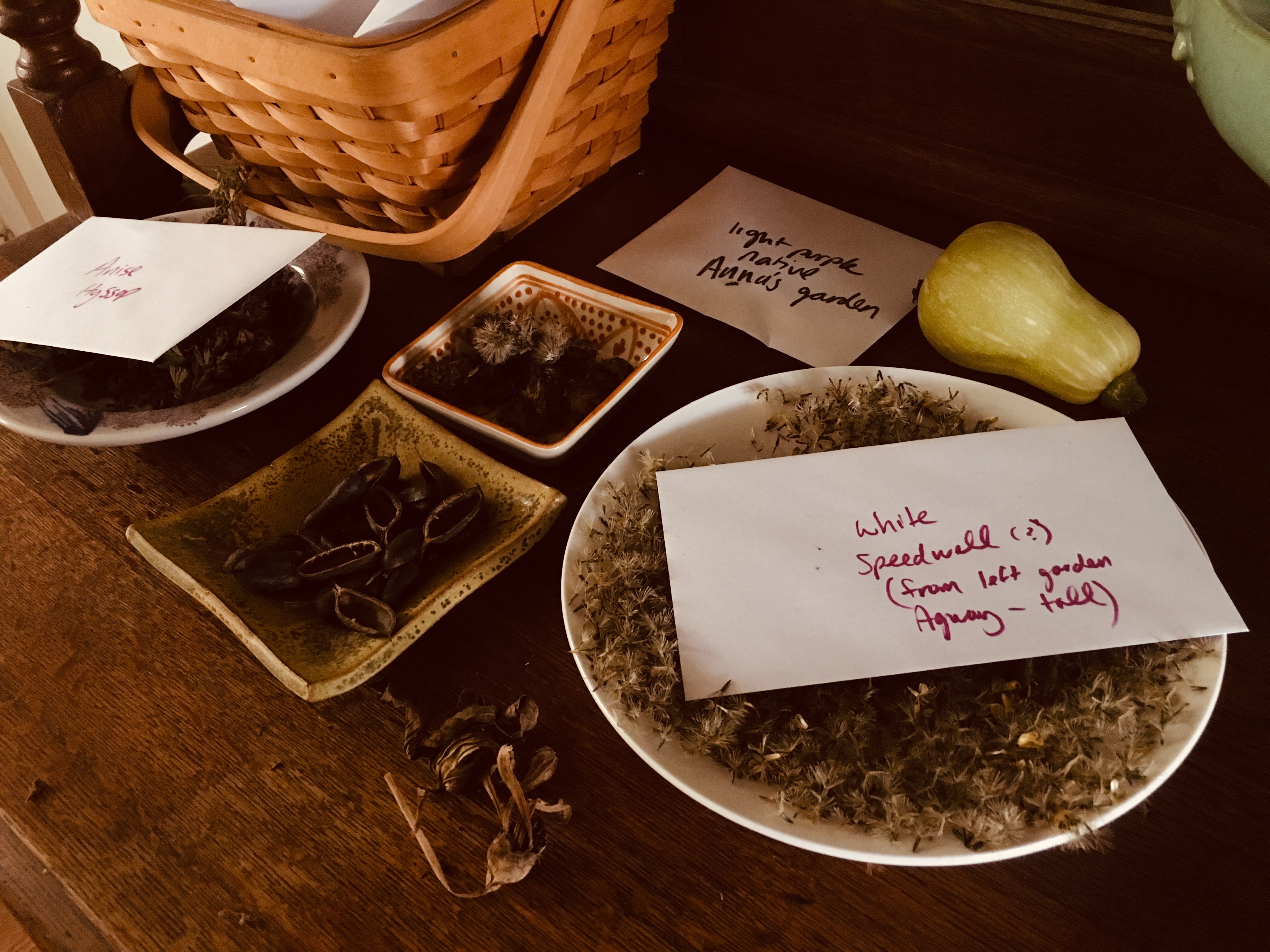
And then there’s STRATIFICATION!
Stratification, not to be confused with scarification, is a cold treatment to mimic the winter freeze and thaw to help break them out of dormancy when you’re ready to germinate them. And to further confuse you, there is also cold MOIST stratification which is a cold AND MOIST treatment which is required for seeds like milkweed, false indigo, cranesbill, lady’s mantle, delphinium, speedwell, scabiosa, primrose…etc.
Since you don’t have anything else to do, let’s cold stratify some seeds! Mix them with moistened (there’s that word again) perlite or peat moss and store them in a sealed plastic bag for whatever period of time they need to stratify (usually ~2 months depending on the type of seed).
 Heart of the Garden
Leave a comment